Sunday, August 8, 2010

Sauerkraut and socks in the sun

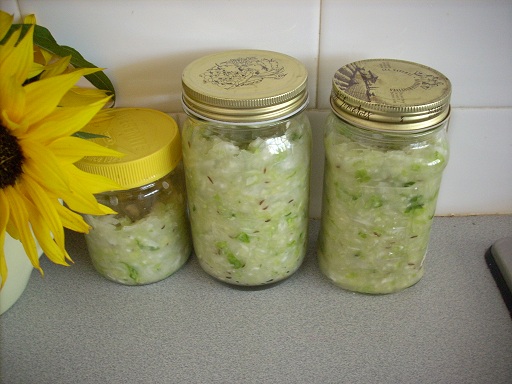
It was all a very relaxing picture on a Sunday arvo, with wifey knitting her socks and me pounding away at some sauerkraut in our chasseur. She has nearly finished one sock incidentally. We were pondering our differences the other night - the process drive verses the goal driven person. I reasoned that a process driven person would end up knitting longer socks because they are not focused so much on finishing the job as a goal driven person. This also partly explains why when we are doing a very big job like cutting up a fallen tree or doing roadwork, Helen peels off and looks for a job that is more rewarding and gives her a feeling that she is getting somewhere. However, there are many advantages of being goal driven and she is much more likely to complete projects in a timely fashion eg. ask for a baby present for friends, and in a matter of hours craft project is completed! 


Sauerkraut did get made. 1 cabbage turned into about 2 large jars.


 I also decided to try some preserved and fermented lemons. I have tried preserved lemons before with salt and citrus/ tartaric acid and they worked well. Hmm - must look up that Lemon liqueur.


preserving lemons


preserved lemon with cinnamon sticks

Tomatoes planted last weekend at the plot were hit by frost, so we will  have to start again with those. Potatoes and beans are still safely underneath the ground. The carrots are getting big enough to pick but should start putting on some bulk in the next month. The snopeas are also feeling the effects of being nicely frozen and are not setting new pods while the already formed pods look a bit speckled.

Planted lettuce and endive seedlings, planted Tat tsoi seeds, thinned tomatos, basil and greens in punnets. My Iranian lemon balm has come up in the punnets which is good. I was given the seed by a man who obtained the seed through his family and it is an annual rather than perennial. I've never seen this seed advertised anywhere and i may be the only seed network that has this seed. My plan is to grow these plants out and multiply my seed supply because this is one of those special heirlooms that could be easily lost.

The Valencia Orange trees are loaded and looking great. These trees never seem to miss a year, while the navel oranges definitely seem to fruit better in alternate years.
This one is growing in the chook yard but its roots are somewhat protected from scratching by black plastic.
Our old chooks have started laying now that the spring is near, so maybe we are not just feeding them for nothing after all.

Monday, August 2, 2010

Action packed long weekend

So the mulberry thinks its spring. This black fruited white mulberry was always a little earlier than the white fruited white mulberry near our back fence. Sometimes it suffers the consequences and gets caught by a late frost - which is predicted for this week. 

 The Asparagus are also showing signs of life especially the ones i have been growing in pots. My neighbour plants which get a bit more sun than mine are up and she is picking. However i'm in no rush to get Asparagus as there is plenty of Broccoli to be had as well as cabbages, sno peas and fennel. We picked some great bulbs of our 2 year old fennel plants from out at the garden plot on the weekend. If you let them grow , the following year that will produce bulbs on the end of long stems.

 Another surprising thing about the fennel was that when i dug over the bed next to them fo rthe tomatoes - there were lots of roots up to 1m away from the fennel plants. I 'd never had thought they would travel so far, even in good soil like that. I planted the tomatoes (grosse lisse) just out of reach of these roots just incase there was an effect from the fennel roots releasing nasty anti nutrients.

At the garden plot there was more work to be done than i had thought. We turned over the compost heap for the last time,

 planted tomatoes, potatoes, french beans, zucchinis, snake beans. I also mulched  the carrots with native Enneapogon grass which is everywhere after the rain this year. I find it very hard to bring myself to buy Hay for mulch when it has travelled so far and when we have perfectly good natural suplies of it growing all around us. I am a scavenger at heart which helps.


camping on Emily creek overnight was great fun and the kids just ran off and made their own fun. We just had to fend off the toottery babies walking around the campfire - and luckily this was successful. The treed were full of budgies and they seemed quite unperterbed by the fact that we had camped there. They still used the same roost trees  above our tent. The morning chorus was quite lovely to listen to as we lied in the swags. A small walk through the bush near the river revealed stacks of Litte Button quails, blasting off from unexpected points on the ground and making me jump. The other exciting find was that Brown quails are back after an abscence of about 7 years. They appeared in Central Australia after the big rains in 2000 and 2001 but then disappeared. The fact that they are back again means we have had a pretty good season

planted thai long green eggplants that i received from Mareeba seedsavers. I had been wanting to try these for a while as i think that they are much more heat resistant than the large purple eggplants that we have grown in the past. The large purple one tend to produce great buckets in the Autumn afte rthe hottest weather is over - that is if they are not eaten by grasshoppers. Eggplants are a very favourite of theirs!

Saturday, July 31, 2010

Tomatoes are up!

So after having spent many days looking into the hothouse and frowning, looking a bit closer and wondering wether all the seed was bad - the tomatoes have all popped up. The 3 days of 25 deg plus weather has been responsible for that. Lets hope somebody gets something out of the many pots crammed into the hothouse.
I'm going to have to start evicting plants soon.

In the hot house we can see - curry plants, wormwood, Jujube, shallots, beets, honey locust and shallots

What else is going on? I really need to go out to the garden plots and pick broccoli and snopeas, dig in some compost ready for spring planting and pull some weeds. I think i'll also put in a row of french beans - as August 1 is my usual planting time, but i did wonder this year wether i should get them going in pots a month earlier to ensure a more prolonged crop before the hot weather sets in.

We have been having lovely crusty "no knead" bread for a while now. It's a convenient sort of loaf because it was sit for up to 24 hours and you can then put it in the oven when the oven is on for other purposes. You also don't have to knead it as the name suggests. I'll have to thank my lovely wife for discovering that one through the blogosphere - i just wouldn't have tried it being the pessimist that i am.

Might have a test run or saurkraut this weekend. I have obtained some unpasteurised goats milk from a friend of a friend and that has been sitting on the bench in a bowl for a week making cheese. Last night i began draining off the whey, which i'll put in a bottle in the fridge to innoculate the saurkraut. The whey keeps this way for up to 6 months but you can also freeze it to keep it for longer. I also read that you can innoculate you saurkraut and other fermented vegies by using the juice from your last jar of saurkraut (i don't think this includes commercial stuff as it may have been pasteurised??) I have not quite finished my last jar from August lasy year.

While we are on food, we have been enjoying our sundried figs (made in Dec) in nut mixes, and cut up finely in fruit salads. Although they are somewhat dry when you first put them away to store, the remaining moisture seems to get redistributed and they are now a bit moister and spongy.

My nut mix consists of almonds and pecans (each nut contains a different form of vitamin E), Pumpkin seeds (from our pumpkins) Goji berries (big vit c), dried figs and sometimes sunflower seeds. This is available to the kids at most times of the day for snacking. We beleive we are at a milestone with the kids as they have stopped picking green things out of their food now and are whoofing down green salads in a way that is most non childlike.

Sunday, July 25, 2010

Pickles and pottering

Pottering sort of weekend. Panted abit more coriander so see if we can keep the supply up for a bit longer into spring. Took a few seed punets (gossip cabbage) out of the hot house and into a nice sunny spot for hardening , as well as some thinning of other seedlings. Cleaned out the rabbit pens and  dug in some of it where the gossip cabbage has been growing. I have planted a lot of summer greens for the chickens in the form of endive, chicory and gossip cabbage. The rabbits also got a lot of neighborhood greens from our weekend wanderings - and the male rabbit went back with the female. I found out recently that rabbits are "stimulated ovulators"- that is they are stimulated to ovulate after copulation (about 10 hours after). So there is no oestrus cycle that we assocaite with other mammals.

The show radish gets processed!

I decided to have a bit of  a test run of my radish pickle (lactofermented)  in readiness for a workshop in a couple of weeks time. This involved choosing a couple of large Diakons, peeling and grating, mixing with  a tablespoon of salt and 4 tablespoons of whey. This is mixed and then pounded for a while with a wooded mortar/pestle thing. Then it is jarred and sealed. This will now sit in the kitchen for 3 days until it has had a good go at fermentation. The recipe is from "nourishing traditions" by Sally Fallon.
Most of 2 large radishes (1.5kg) fitted into a large pickle jar.

We also pricked out some edibles and medicinal herbs - Malva sp, Euphorbia peplus and Liquorice.

Friday, July 23, 2010

The seed man hands on the batten

My seedsavers email to our mailing list was sent out today, so i've posted it up here too.

Preparing to save seeds from the winter garden.
.For those who have not saved much seed, we will be working through winter vegetables and talking about how to best save seeds from them. We will cover hybridising, pests and assessing ripeness of seed.


Changing of the guard

As I’m leaving Alice Springs in November I’ll be handing over the running of Alice Springs seedsavers. There are various parts to running a seed network in a low key kind of way. These 4 jobs are listed below. Some of the roles do not require particularly developed skills in gardening or seedsaving but do require a consistent commitment and communication with the group. Consider taking on one of these roles if you would like to ensure the seednetwork in Alice Springs continue to thrive.


If you would like to take part in seedsavers in a more active way but can’t attend the next meeting, reply to this email and something can be arranged.

The seedbank

This consists almost wholly of seeds that have been grown locally by myself and other members of the community. The seedbank managers aim is to get people growing as many of theses as possible and to keep a viable supply of seeds. This may involve enquiring if people can contribute the seeds of certain vegetables or growing out some varieties and saving them every 2-3 years.

The seedbank also contains seeds that have been sent from other seed networks in Australia or from seedsavers. The seeds that perform well are saved from these varieties.

There is a rough division in the seedbank between summer and winter vegetables and this seedbank is shared at meetings where people are welcome to take from seed to grow their own. With the taking of seed there is the obligation to save seeds and to share them with others in the future.

You may also get requests from other seed networks in Australia who are looking for particular seeds, so you may need to package up seeds to send away in the mail.

Receiving seed for the seebank is also an important part of this role. Details should be written down about the vegetable, the date of harvest and who provided it. Questions should be asked as to ascertain the experience of the seedsaver who provided the seed and to ascertain how likely it is that the seed may be hybridised with other vegetable varieties in the garden. The origin of the seed should be taken into account – if it was from the local shops, it may be a hybrid and needs to be grown out for several years to see if it grows “true to type”.

Bulk seed.

Often people save seed in quite large quantities resulting in many thousands of seeds. Often this is more seed than can be used by the seed network and this seed can be shared with the wider community. (*If you receive a large amount of seed from someone with unknown experience that you plan to package, it is wise to grow out this batch in the first year in order to make sure it is what it is supposed to be*). One way of sharing seed with the wider community is packaging seeds with appropriate labels which can be sold to locals though events or through shops. This is also a way of promoting seedsavers in the community.

The website

http://www.seedsavers.net/lsn/alice-springs-seed-savers (scroll down to view)

Seedsavers network hosts a page for each seed network in Australia where various information about each group can be posted. Meeting dates can be posted here as well as links to other websites. There is also a spot for putting seeds you are searching for – and this has proved a very successful way of finding hard to get seeds.

The events

To raise or maintain the profile of seedsavers in the community, we host 2 events each year. Depending on your energy and enthusiasm you may run more events but the events below we have found provide the best bang for your buck.

The Steiner fare is usually a very successful event and many people sign up to be on the mailing list so they can receive notices of the next meeting. It is usually held on the last weekend in May.

The desert smart eco fair is the other event where seedsavers makes an appearance and we usually run a workshop on the day as part of the program. This year it is on September 18.


The mailing list and meetings

The manager of the mailing list simply sends out meeting notices with the appropriate details so that people can attend. These should be sent at least one week in advance. Meetings are usually held four times a year at the changing of the seasons which often are good planting times as well.

March/ April – planting time

August – planting time

November – Seed harvest for winter vegies

Jan/Feb – seedharvest for summer vegies.

Other event notices should also be passed onto people and any relevant correspondence about seedsers network or seed issues.

There may also be other more specific themes explored at meetings such as seed sorting, growing seedlings, etc etc. You can guage what is needed by talking to people in the group or in the community.

Thursday, July 22, 2010

New babes and seeds to save

New baby rabbits have arrived. this time the litter is bigger - probably 7 - 9 but i haven't been able to get a close look yet. She did have them in theburrow again despite the fact that the hutch looked pretty good to me.
 The winter rain has brought out lots of grren growth and herbs so there are mounds of milk thistle (and wild lettuce and marshmallow) to be had around the neighbourhood. i've been stopping my bike on the way home to partake of the bounty on the road verges.
On the weekend we harvested carrots, fennel, chines greens, broccoli and planted some beetroot - and made a nice Ministrone. My cucumber seed has finally fermented enough that the seeds are free from the gooey coating. This time i floated the green goo off the seeds while the seeds sank to the bottom of the container. They are layed out on a tea towel until they are dry enough to transfer to a paper bag for further drying.

We also had a big seed sowing of summer vegetables - including tomatoes - although we should have planted these a bit earlier. I'm on the verge of running out of room in the hot house!

Sunday, July 11, 2010

Horny cucumbers

Sorry if your google search has turned up the wrong sort of website. This is a gardening blog, full of wholesome ingredients such as.....
the African horned cucumber
I have grown these things for years - or rather they grew themselves after i planted them for the first time. They are no ordinary cucumber and have a particular timeframe when flowering and fruiting.
They will only fruit after mid summer and in declining daylight hours , so here that means march and april and they go on to ripen into winter. I have had a bucket of them sitting around waiting for seedsaving and decided to do it on this drizzly day.
This involves scraping out all of the pulp and seeds and putting it into a large container (as i had a large number of cucumbers). By the time i finished i had nearly filled this container with green frothy goo, which will now sit and ferment for over a week. This will break down the gelatinous layer around the seed , and when washed after a week of fermenting the seeds will come clean. They are then dried.
 This technique can be used for all cucumbers as well as tomatoes. you may have to add a little water to the mix if it is not liquidy enough.

These cucumbers give you a glut of fruit late in the year. I prefer to pick them while still quite green and when the seeds are small or poorly formed and eat them like cucumber - peeled. Today my kids were eating the contents out of the ripened fruits and it was slightly sweet. They are however bullet proof in regards to all hot weather conditions and all sorts of pests, as long as they have water.

Speaking of weather it has rained again over the weekend and in the evening today the coulds seemed to descend to near ground level. I thought you only got fog in the morning and i don't remember even seeing fog here before.

Went to a pruning workshop this afternoon which was very informative. I learned that different types of grape vines need different types of pruning - spur and cane. That was the biggest discovery for me anyway. I look forward to doing a bit of pruning in the near future.